
Doing the work that we do of making disciples, planting churches, and teaching others to do the same, the structure of how we do that work is found in the parable that Jesus told, a parable that is today most frequently referred to as the Parable of the Growing Seed:
He also said, “This is what the kingdom of God is like. A man scatters seed on the ground. Night and day, whether he sleeps or gets up, the seed sprouts and grows, though he does not know how. All by itself the soil produces grain—first the stalk, then the head, then the full kernel in the head. As soon as the grain is ripe, he puts the sickle to it, because the harvest has come.”
Mark 4:26-29
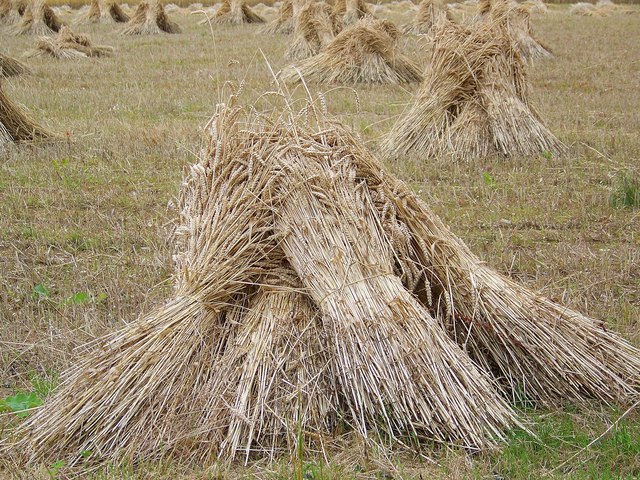
Explanation of the Parable of the Growing Seed
As we have taught others also to make disciples and plant churches, we have also taught this parable to them, interpreting it as a way that the kingdom of God grows.
And how does that happen? We see these main components:
First, the man enters the field and scatters seed on the ground.
Next, we see that the seed sprouts and grows, even if the man doesn’t know how it works. The plants go through a process of growth to reach maturity.
Finally, when the plants reach maturity, the man takes a sickle to the plants and harvests them because it is that time of year.
From time to time, as we have shared this parable, we have had people that have told us that they would interpret the parable differently. Instead of it being a guide to understanding how we might structure our disciple-making and church planting work, they told us that they thought that the man in the parable was Jesus who had come to sow the seed of the Gospel of the kingdom of God, reaping a harvest at the end of the age, at the time of the final judgment.
A different interpretation
These people were making the connection between the final verse in the parable to part of the reading that we had for today in Revelation 14. First, here is last verse once again:
As soon as the grain is ripe, he puts the sickle to it, because the harvest has come.
Mark 4:29
And then here is the connection that they would make:
I looked, and there before me was a white cloud, and seated on the cloud was one like a son of man with a crown of gold on his head and a sharp sickle in his hand. Then another angel came out of the temple and called in a loud voice to him who was sitting on the cloud, “Take your sickle and reap, because the time to reap has come, for the harvest of the earth is ripe.” So he who was seated on the cloud swung his sickle over the earth, and the earth was harvested.
Revelation 14:14-16
I actually wouldn’t necessarily try to argue against this interpretation as I do see a significant connection point between the two. In Revelation 14, it appears that it is Jesus who is harvesting. It appears that he is reaping because the fruit from the earth has become mature, has become ripe, just as the parable had said. As a result, I would suggest that this is probably a valid interpretation of the Parable of the Growing Seed.
However, I would also suggest that it isn’t necessarily limited to that interpretation. As we view the Bible and understand the scriptures, it is important to understand all that is being said and the context of the discussion.
The wheat and the tares
In this particular case, Jesus is describing the kingdom of God and it appears that he is describing how the kingdom grows. He isn’t simply referring to the harvesting of the earth. If we were looking at a representation of the way that the harvest would work, then we should consider instead a different parable. We would instead consider the Parable of the Wheat and the Tares in Matthew 13. It says this:
“The kingdom of heaven is like a man who sowed good seed in his field. But while everyone was sleeping, his enemy came and sowed weeds among the wheat, and went away. When the wheat sprouted and formed heads, then the weeds also appeared.
“The owner’s servants came to him and said, ‘Sir, didn’t you sow good seed in your field? Where then did the weeds come from?’
“‘An enemy did this,’ he replied.
“The servants asked him, ‘Do you want us to go and pull them up?’
“‘No,’ he answered, ‘because while you are pulling the weeds, you may uproot the wheat with them. Let both grow together until the harvest. At that time I will tell the harvesters: First collect the weeds and tie them in bundles to be burned; then gather the wheat and bring it into my barn.’”
Matthew 13:24-30
Jesus goes on to explain the parable a little later by saying this:
“The one who sowed the good seed is the Son of Man. The field is the world, and the good seed stands for the people of the kingdom. The weeds are the people of the evil one, and the enemy who sows them is the devil. The harvest is the end of the age, and the harvesters are angels.
“As the weeds are pulled up and burned in the fire, so it will be at the end of the age. The Son of Man will send out his angels, and they will weed out of his kingdom everything that causes sin and all who do evil. They will throw them into the blazing furnace, where there will be weeping and gnashing of teeth. Then the righteous will shine like the sun in the kingdom of their Father. Whoever has ears, let them hear.
Matthew 13:37-43
If we look at a direct comparison with what is said in Revelation 14, we see a more direct connection between it and this second parable regarding the wheat and the weeds. The full context of Revelation also includes a second harvester, an angel this time – which, incidentally, is very similar to what Jesus said would happen within the parable that he told in Matthew 13 – who is harvesting in the sense of swinging a sickle to harvest grapes as the wrath of God is poured out on those that have not been “harvested” for the kingdom of God:
Another angel came out of the temple in heaven, and he too had a sharp sickle. Still another angel, who had charge of the fire, came from the altar and called in a loud voice to him who had the sharp sickle, “Take your sharp sickle and gather the clusters of grapes from the earth’s vine, because its grapes are ripe.” The angel swung his sickle on the earth, gathered its grapes and threw them into the great winepress of God’s wrath. They were trampled in the winepress outside the city, and blood flowed out of the press, rising as high as the horses’ bridles for a distance of 1,600 stadia.
Revelation 14:17-20
I would suggest, therefore, that the most close association between Jesus’s parables and the events that are to come would be between this parable in Matthew 13 with Revelation 14. However, does that mean that the parable that Jesus told in Mark 4 is therefore speaking of something completely different? No, I wouldn’t necessarily suggest that to be the case.
Why not? Why not make a different interpretation?
The kingdom of God is now and not yet
Jesus is helping us to understand the kingdom of God and the kingdom works on several principles, one of the more important among them being that the kingdom of God is both “here” and also “yet to come”. Or you might also say it is “now” and it is “not yet”.
What do we mean by that?
When Jesus came 2000 years ago, he came preaching that we should repent and believe for the kingdom of God was near. What did he mean by that? How can the kingdom of God be near? It was near because the king had come.
Jesus himself is the king in the kingdom of God. There are several passages in which he claims or shows this to be the case, but we can illustrate it with one verse. At the beginning of the passage that we today refer to as the Great Commission, Jesus says this:
All authority in heaven and on earth has been given to me.
Matthew 28:18
If you have all authority, both in heaven and on earth, who are you? You are the king.
Jesus is the king in the kingdom of God. He has been given all authority, over all things, in both heaven and on the earth, and it is for that reason that he is able to tell the disciples that they must go and make his disciples amongst all nations. Jesus is not only saying that he has been given the authority, but he is also claiming that he is worthy to be worshiped, worthy to be followed, worthy to be their God. The disciples are to make his disciples, both amongst the Jews as well as amongst all of the other nations on the earth!
Jesus, therefore, has come as the king in that particular moment, but there is also a point in the future when he will come again. He promised that he would return and that he would once again judge the world, so we can easily see and understand the sense in which the kingdom of God is “not yet” or “yet to come” because Jesus has not yet returned to the earth. At that point, the kingdom of God will be fully established and we will no longer say that the kingdom is “not yet”, but we will instead say that it is fully “now”.
But until that point, we also need to reason with regard to the sense in which the kingdom of God is already “now”. Jesus came and was king when he came. Yet even now he still reigns as king over all. He said it just before he left. He has been given all authority in heaven and on earth, so the kingdom of God is operating even now. It isn’t “on hold” until Jesus returns. Christ’s rule and reign over all of heaven and all of earth continue even while he is away, even while we are still waiting for him to return.
The kingdom of God even today
In that context, then, we have to return back to Jesus’s parable. He says that he is describing the kingdom of God, a kingdom that continues even today. He is describing a kingdom within which Jesus has given his disciples the command to go and make more disciples. The kingdom is continuing to grow and expand and Jesus used this parable of the growing seed to describe how the kingdom grows.
We can, therefore, affirm that Jesus may be describing himself in the parable. He may be the one who is sowing the seed of the Gospel, seeing the seed grow (although I might question how it is possible that he doesn’t know how!) into a fully mature plant, and then completes the process of the final harvest in the end. Jesus may be referring to himself in this parable, but I believe that in the context of the fact that the kingdom of God still being operational and growing even today, we can also say that Jesus wasn’t only referring to himself.
As we have already pointed out, Jesus sent his disciples to make disciples. Jesus also told his disciples that they would do more than him:
Very truly I tell you, whoever believes in me will do the works I have been doing, and they will do even greater things than these, because I am going to the Father.
John 14:12
In fact, Jesus doesn’t just say that they will do greater things than him. He says, instead, that whoever believes in him will do the same works, and even greater things.
Doing greater things
How is that possible? How could it possibly be that we would do greater things than Jesus? He raised people from the dead, and even rose from the dead himself. Are there many people out there doing greater things than that?
I don’t think that Jesus means that the miracles will be even greater. He is referring, instead, to the work of bringing people from spiritual death to spiritual life. A spiritual resurrection from the dead – in fact, the greatest, yet probably the most unrated miracle of all. Each person who comes to Christ passes from death to life in Christ, and in this way, we can understand that there are many people who produce fruit for God, doing the works that Christ did, and in fact even more than Jesus did.
Jesus told the parable of the growing seed, therefore, to not only explain how he would do the work of the kingdom, but also how we must continue the work that he started, sowing the seed of the Gospel, making disciples, and harvesting by gathering the mature plants.
How can we, then, harvest the mature plants?
This happens in the same way that we saw Paul and the other Apostles do as they went to make disciples and plant churches. They learned from Christ and they went to do the work that they were called to do. Seeing a harvest in our days, even now, is to bring people to Christ and to gather them – as you would in a harvest – together in groups of believers.
All of this to say that I affirm the interpretation that Jesus’s parable might refer to himself and and the final harvest that he will experience at the end of time. That said, I also believe that in the context of the kingdom of God having both a sense of “now” and “not yet”, I also affirm that Jesus is telling us through this parable how his kingdom will grow while we are living here and now. If we listen to Jesus, then, we should understand well that Jesus is telling us how his kingdom works, how his kingdom grows. He is telling us how we will one day all be harvested by Christ as we are gathered to him, but in the meantime, we also are called to harvest in the sense of gathering together new believers that we are discipling so that new groups, namely new churches, will be formed.